
Product Description
| Basic parameter | ||||
| Motor size:Φ34.3mx 32.8mm | Shaft core: titanium alloy | |||
| Coil wire: high temperature resistant copper | Slot pole :12N14P | |||
| Output axis: 14.0mm*M5 | Lead :18AWG*260mm | |||
| Magnet type: Tile | Mounting hole:4*M3*∅19 | |||
| Winding mode: Single strand | Stator diameter :28.0mm | |||
| Motor parameter | ||||
| KV value:1300 | Voltage support:(4-6S) | |||
| unloaded(10V):0.83A | Interphase internal resistance:79Ω | |||
| Maximum power:846W | Weight line:48.6g | |||
| Load performance(1300KV) | |||||||
| paddle | Throttle (%) |
Voltage(V) | Curren (A) |
Speed (rpm) |
pulling force(g) | Power(W) | force effect (g/w) |
| 6032 | 20 | 23.97 | 1.827 | 9084 | 210.02 | 45.99 | 4.3444 |
| 30 | 23.93 | 3.698 | 12273 | 403.49 | 92.93 | 4.1249 | |
| 40 | 23.88 | 5.823 | 14501 | 572.37 | 146.06 | 3.7240 | |
| 50 | 23.84 | 7.773 | 16184 | 717.71 | 194.57 | 3.5055 | |
| 60 | 23.79 | 9.797 | 17655 | 853.11 | 244.76 | 3.3117 | |
| 70 | 23.73 | 11.79 | 18898 | 981.76 | 293.79 | 3.1749 | |
| 80 | 23.66 | 14.751 | 20496 | 1164.23 | 366.35 | 3.0191 | |
| 90 | 23.5 | 19.492 | 22531 | 1430.48 | 481.01 | 2.8253 | |
| 100 | 23.45 | 21.626 | 23356 | 1528.21 | 532.46 | 2.7265 | |
| paddle | Throttle (%) |
Voltage(V) | Curren (A) |
Speed (rpm) |
pulling force(g) | Power(W) | force effect (g/w) |
| 6145 | 20 | 23.96 | 1.963 | 7671 | 210.45 | 49.35 | 4.055 |
| 30 | 23.92 | 4.163 | 1571 | 419.07 | 104.58 | 3.808 | |
| 40 | 23.86 | 6.595 | 12305 | 579.47 | 165.27 | 3.340 | |
| 50 | 23.8 | 8.928 | 14014 | 772.94 | 223.13 | 3.291 | |
| 60 | 23.73 | 11.527 | 15561 | 933.48 | 287.28 | 3.087 | |
| 70 | 23.64 | 14.892 | 16871 | 1121.68 | 369.71 | 2.882 | |
| 80 | 23.49 | 19.966 | 18750 | 1381.95 | 492.45 | 2.666 | |
| 90 | 23.36 | 25.569 | 20622 | 1672.60 | 627.17 | 2.534 | |
| 100 | 23.26 | 29.155 | 20907 | 1801.73 | 712.01 | 2.404 | |
| paddle | Throttle (%) |
Voltage(V) | Curren (A) |
Speed (rpm) |
pulling force(g) | Power(W) | force effect (g/w) |
| 7035R clover | 20 | 23.96 | 1.988 | 7505 | 261.75 | 49.98 | 4.973 |
| 30 | 23.9 | 4.409 | 10072 | 509.79 | 110.67 | 4.378 | |
| 40 | 23.85 | 6.726 | 11879 | 716.71 | 168.42 | 4.042 | |
| 50 | 23.79 | 9.407 | 13275 | 918.83 | 234.99 | 3.717 | |
| 60 | 23.71 | 12.222 | 14844 | 1115.68 | 304.29 | 3.484 | |
| 70 | 23.57 | 16.505 | 16278 | 1411.50 | 408.45 | 3.282 | |
| 80 | 23.42 | 22.277 | 17991 | 1731.54 | 547.89 | 3.002 | |
| 90 | 23.26 | 28.959 | 19474 | 2054.27 | 707.28 | 2.760 | |
| 100 | 23.18 | 31.851 | 19937 | 2174.89 | 775.215 | 2.665 | |
| paddle | Throttle (%) |
Voltage(V) | Curren (A) |
Speed (rpm) |
pulling force(g) | Power(W) | force effect (g/w) |
| 7042R 2 leaves | 20 | 23.97 | 2.005 | 7242 | 266.32 | 50.40 | 5.015 |
| 30 | 23.9 | 4.543 | 9825 | 516.60 | 114.03 | 4.304 | |
| 40 | 23.84 | 7.276 | 11440 | 709.00 | 182.07 | 3.698 | |
| 50 | 23.79 | 9.477 | 12839 | 891.05 | 236.78 | 3.576 | |
| 60 | 23.71 | 12.681 | 14234 | 1081.51 | 315.63 | 3.255 | |
| 70 | 23.55 | 17.382 | 15906 | 1344.35 | 429.87 | 2.971 | |
| 80 | 23.4 | 23.907 | 17431 | 1683.23 | 587.37 | 2.723 | |
| 90 | 23.2 | 31.519 | 18584 | 1979.81 | 767.97 | 2.449 | |
| 100 | 23.13 | 34.87 | 19030 | 2093.92 | 846.93 | 2.348 | |
| Motor load @ 100% throttle operation, at an ambient temperature of 26 degrees Celsius, the above data is for reference only | |||||||
| Motor parameter | |||||||
| KV value:1750 | Voltage support:(4-6S) | ||||||
| unloaded(10V):1.35A | Interphase internal resistance:48Ω | ||||||
| Maximum power:1312W | Weight line:48.9g | ||||||
| Load performance(1750KV) | |||||||
| paddle | Throttle (%) |
Voltage(V) | Curren (A) |
Speed (rpm) |
pulling force(g) | Power(W) | force effect (g/w) |
| 6032 | 20 | 23.97 | 3.201 | 11018 | 327.24 | 80.54 | 3.858 |
| 30 | 23.88 | 6.864 | 14543 | 586.50 | 172.10 | 3.238 | |
| 40 | 23.79 | 10.574 | 17101 | 801.64 | 264.18 | 2.883 | |
| 50 | 23.69 | 14.57 | 19123 | 1004.89 | 362.36 | 2.634 | |
| 60 | 23.56 | 18.443 | 20926 | 1195.24 | 456.23 | 2.489 | |
| 70 | 23.46 | 22.295 | 22315 | 1388.88 | 549.26 | 2.403 | |
| 80 | 23.31 | 28.403 | 24308 | 1664.40 | 695.31 | 2.274 | |
| 90 | 23.11 | 36.696 | 26193 | 1987.37 | 890.40 | 2.120 | |
| 100 | 23.02 | 40.451 | 26984 | 2119.41 | 977.55 | 2.060 | |
| paddle | Throttle (%) |
Voltage(V) | Curren (A) |
Speed (rpm) |
pulling force(g) | Power(W) | force effect (g/w) |
| 6145 | 20 | 23.96 | 3.353 | 8092 | 250.03 | 84.32 | 2.907 |
| 30 | 23.86 | 7.369 | 12290 | 584.96 | 184.59 | 3.571 | |
| 40 | 23.77 | 11.619 | 14568 | 832.44 | 289.91 | 2.727 | |
| 50 | 23.62 | 16.805 | 16679 | 1060.25 | 416.75 | 2.418 | |
| 60 | 23.48 | 21.219 | 18036 | 1257.86 | 523.22 | 2.284 | |
| 70 | 23.32 | 28.105 | 19597 | 1536.00 | 688.17 | 2.120 | |
| 80 | 23.14 | 35.668 | 21491 | 1817.36 | 866.46 | 1.992 | |
| 90 | 22.9 | 44.897 | 22973 | 2086.69 | 1079.72 | 1.836 | |
| 100 | 22.79 | 49.694 | 23159 | 2242.52 | 1189.02 | 1.792 | |
| paddle | Throttle (%) |
Voltage(V) | Curren (A) |
Speed (rpm) |
pulling force(g) | Power(W) | force effect (g/w) |
| 7 0571 | 20 | 23.96 | 3.589 | 8561 | 353.12 | 90.30 | 3.723 |
| 30 | 23.86 | 7.542 | 11607 | 687.82 | 189.00 | 3.460 | |
| 40 | 23.75 | 12.015 | 13700 | 975.43 | 299.67 | 3.093 | |
| 50 | 23.6 | 17.136 | 15485 | 1276.05 | 424.62 | 2.856 | |
| 60 | 23.45 | 22.918 | 16923 | 1527.53 | 564.17 | 2.573 | |
| 70 | 23.26 | 30.332 | 18687 | 1860.58 | 740.88 | 2.385 | |
| 80 | 23.05 | 38.936 | 19976 | 2155.74 | 942.59 | 2.173 | |
| 90 | 22.83 | 47.955 | 21314 | 2418.20 | 1149.75 | 1.998 | |
| 100 | 22.72 | 52.323 | 21657 | 2537.18 | 1248.45 | 1.930 | |
| paddle | Throttle (%) |
Voltage(V) | Curren (A) |
Speed (rpm) |
pulling force(g) | Power(W) | force effect (g/w) |
| 70428 | 20 | 23.95 | 3.581 | 8679 | 391.63 | 90.09 | 4.131 |
| 30 | 23.85 | 7.829 | 11392 | 686.52 | 196.14 | 3.327 | |
| 40 | 23.74 | 12.195 | 13190 | 943.67 | 304.08 | 2.949 | |
| 50 | 23.57 | 17.537 | 14977 | 1218.07 | 434.07 | 2.666 | |
| 60 | 23.42 | 23.773 | 16317 | 1456.56 | 584.54 | 2.367 | |
| 70 | 23.23 | 31.496 | 17955 | 1746.29 | 768.18 | 2.159 | |
| 80 | 23.01 | 40.666 | 19189 | 2030.52 | 982.49 | 1.964 | |
| 90 | 22.75 | 50.874 | 20327 | 2148.32 | 1215.27 | 1.680 | |
| 100 | 22.64 | 55.195 | 20340 | 2207.27 | 1312.19 | 1.599 | |
| Motor load @ 100% throttle operation, at an ambient temperature of 26 degrees Celsius, the above data is for reference only | |||||||
Common problems:
Q: Who are we?
A: We are a specialized manufacturer of drone motors
Q: Can you give me a sample order for the drone motor?
Answer: Yes, the minimum order quantity is low, you can provide 1 sample for testing, but you are responsible for the transportation cost.
Q. What about wait times?
A: Samples take 7-10 days.
Q: How do you ship the goods? How long will it take to get there?
A: We usually ship by air. It usually takes 7-15 days to arrive. Please contact us if you need another mode of transportation before shipping.
Q: Can you support oem and odm?
A: We can provide you with OEM/ODM services.
Q: What is the lead time of the sample?
A: Usually 1-3 weeks.
Q: What is the lead time for mass production?
A: Usually 1 month. It depends on the quantity of your order or other special circumstances.
Q: What are your payment terms?
A: T/T, Western Union and other payment methods are available. Please contact us with the payment method you require before ordering. Payment terms: 30%-50% deposit, balance paid before delivery.
Q: Can my logo be printed on the product?
A. Yes. Please inform and authorize us officially before we produce, and confirm the design according to the sample.
Q: Can I visit your factory before ordering?
A: Yes, welcome to visit our factory. /* January 22, 2571 19:08:37 */!function(){function s(e,r){var a,o={};try{e&&e.split(“,”).forEach(function(e,t){e&&(a=e.match(/(.*?):(.*)$/))&&1
| Application: | Universal, Industrial |
|---|---|
| Operating Speed: | Adjust Speed |
| Excitation Mode: | Excited |
| Function: | Control |
| Casing Protection: | Protection Type |
| Number of Poles: | 14 |
| Samples: |
US$ 20/Piece
1 Piece(Min.Order) | |
|---|
| Customization: |
Available
|
|
|---|
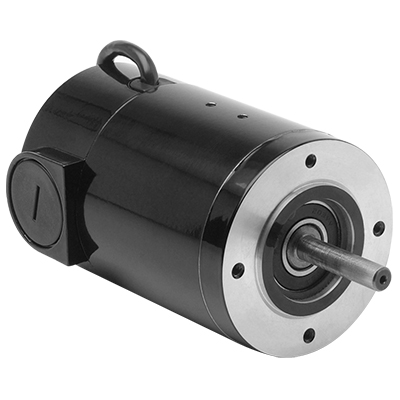
What are the main components of a DC motor, and how do they contribute to its functionality?
A DC (Direct Current) motor consists of several key components that work together to enable its functionality. Each component plays a crucial role in the operation of the motor. Here’s a detailed explanation of the main components of a DC motor and their contributions:
1. Stator:
The stator is the stationary part of the motor. It typically consists of permanent magnets or electromagnets that produce a fixed magnetic field. The stator’s magnetic field interacts with the rotor’s magnetic field to generate the required torque for motor rotation. The stator provides the foundation for the motor’s magnetic field and contributes to its overall stability and efficiency.
2. Rotor:
The rotor is the rotating part of the motor and is connected to the motor’s output shaft. It contains coils or windings that carry the armature current. The rotor’s windings interact with the stator’s magnetic field, resulting in the generation of a mechanical force that causes the rotor to rotate. The rotor’s movement is responsible for converting electrical energy into mechanical motion, enabling the motor to perform its intended function.
3. Armature:
The armature is the core of the rotor that holds the armature windings. The armature windings are typically made of copper wire and are evenly spaced around the armature. When a current passes through the armature windings, a magnetic field is created around them. This magnetic field interacts with the stator’s magnetic field, resulting in the generation of a torque that drives the rotor’s rotation. The armature is a critical component that facilitates the conversion of electrical energy into mechanical energy.
4. Commutator:
The commutator is a cylindrical ring attached to the rotor shaft. It consists of multiple segments, usually made of copper, that are insulated from each other. The commutator plays a vital role in the DC motor’s operation by providing the necessary electrical connections to the armature windings. As the rotor spins, the brushes make physical contact with different commutator segments, effectively reversing the direction of the current in the armature windings at the appropriate timing. This reversal of current flow ensures that the torque generated in the armature windings is always in the same direction, allowing for continuous rotation of the rotor.
5. Brushes:
The brushes are stationary contacts that make physical contact with the commutator segments. They are typically made of carbon or graphite and provide electrical connections to the armature windings. The brushes supply the current to the armature windings through the commutator, allowing for the creation of the magnetic field necessary for motor operation. The brushes need to maintain proper contact with the commutator to ensure efficient electrical transmission and reliable motor performance.
6. Housing or Frame:
The housing or frame of the DC motor encloses and supports all the internal components. It provides structural integrity, protects the motor from external elements, and helps dissipate heat generated during operation. The housing or frame also serves as a mounting point for the motor, allowing it to be securely installed in various applications.
By understanding the main components of a DC motor and their contributions, one can gain insights into how each part works together harmoniously to achieve the desired motor functionality.
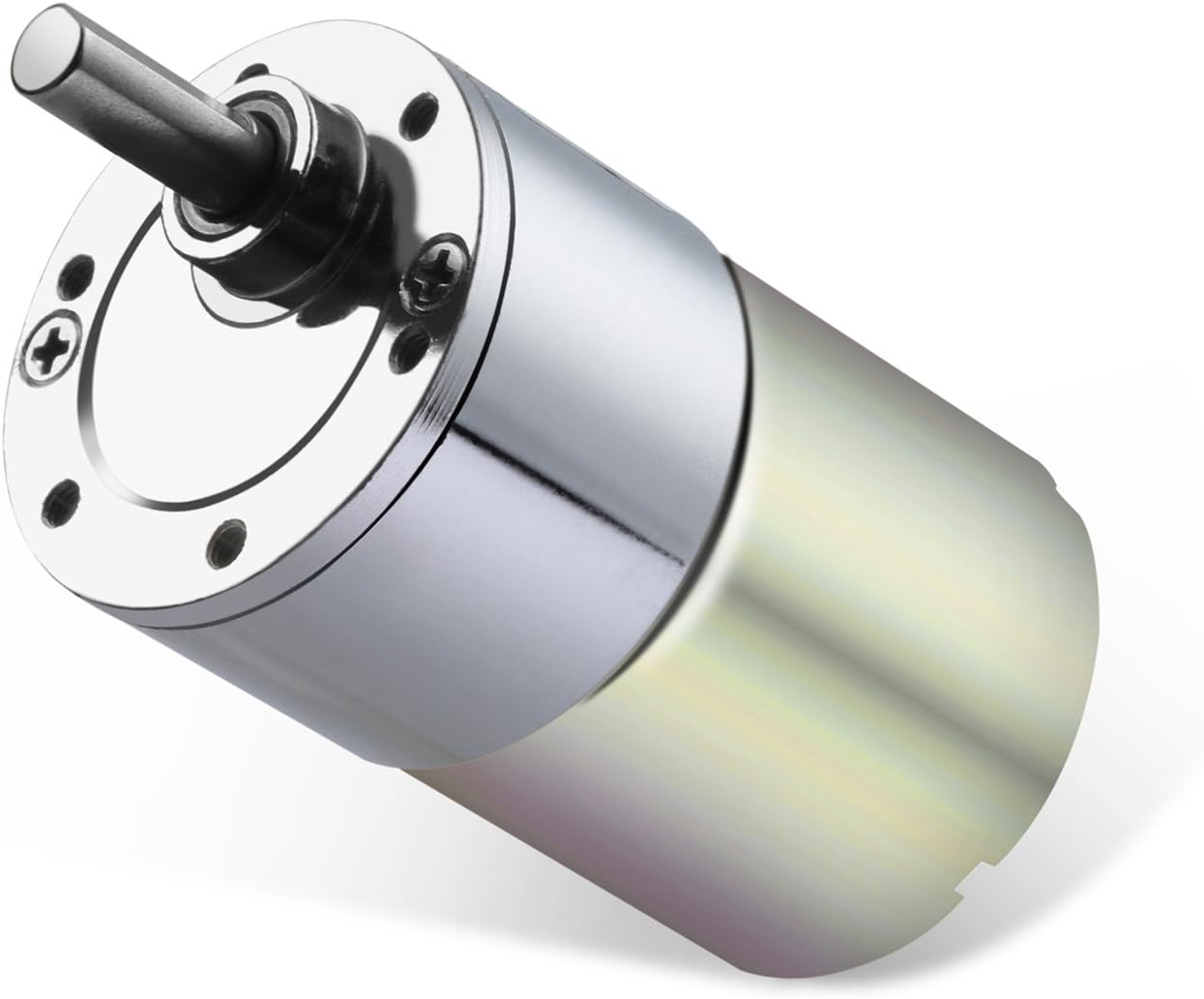
What role does commutation play in the operation of a DC motor?
In the operation of a DC (Direct Current) motor, commutation plays a crucial role in ensuring the continuous rotation of the motor and the conversion of electrical energy into mechanical motion. It is the process by which the direction of the current in the armature winding is periodically reversed to maintain a constant torque and facilitate the rotation of the motor. Here’s a detailed explanation of the role of commutation in the operation of a DC motor:
Commutation is necessary in a DC motor because the magnetic field generated by the armature winding needs to be constantly aligned with the stator’s magnetic field for efficient torque production. The stator of a DC motor typically consists of permanent magnets or electromagnets that create a fixed magnetic field. The armature winding, located on the rotor, produces a magnetic field that interacts with the stator’s field to generate torque.
The commutation process is achieved through the use of a commutator and brushes. The commutator is a cylindrical ring with multiple segments, while the brushes are conductive contacts that make physical contact with the commutator segments. The armature winding is connected to the commutator, and as the rotor spins, the brushes maintain contact with different segments.
As the rotor rotates, the commutator and brushes ensure that the direction of the current in the armature winding is reversed at specific intervals. This reversal of current flow is necessary to maintain a consistent torque in the same rotational direction. Without commutation, the torque generated by the motor would fluctuate in both magnitude and direction, leading to instability and erratic motor behavior.
The commutation process involves two stages: mechanical commutation and electrical commutation.
1. Mechanical Commutation: As the rotor rotates, the brushes make contact with different segments of the commutator. The segments are insulated from each other to prevent short circuits. When the brushes move from one segment to another, the current flowing through the armature winding is switched to a different coil or set of coils. This mechanical switching ensures that the magnetic fields produced by the winding are properly aligned with the stator’s field, resulting in continuous torque production.
2. Electrical Commutation: The reversal of current in the armature winding is achieved through electrical commutation. When the brushes make contact with a new commutator segment, the current flow in the winding is redirected to maintain the desired torque direction. The timing and sequence of the current reversal are critical to ensure smooth and efficient motor operation.
The commutation process in a DC motor is a dynamic and continuous operation. It allows for the conversion of electrical energy into mechanical motion by providing a consistent torque output. The efficiency and performance of the motor are greatly influenced by the quality and effectiveness of the commutation process.
In summary, commutation plays a vital role in the operation of a DC motor by ensuring the continuous rotation of the motor and the production of consistent torque. It involves the mechanical and electrical switching of the current direction in the armature winding, facilitated by the commutator and brushes.
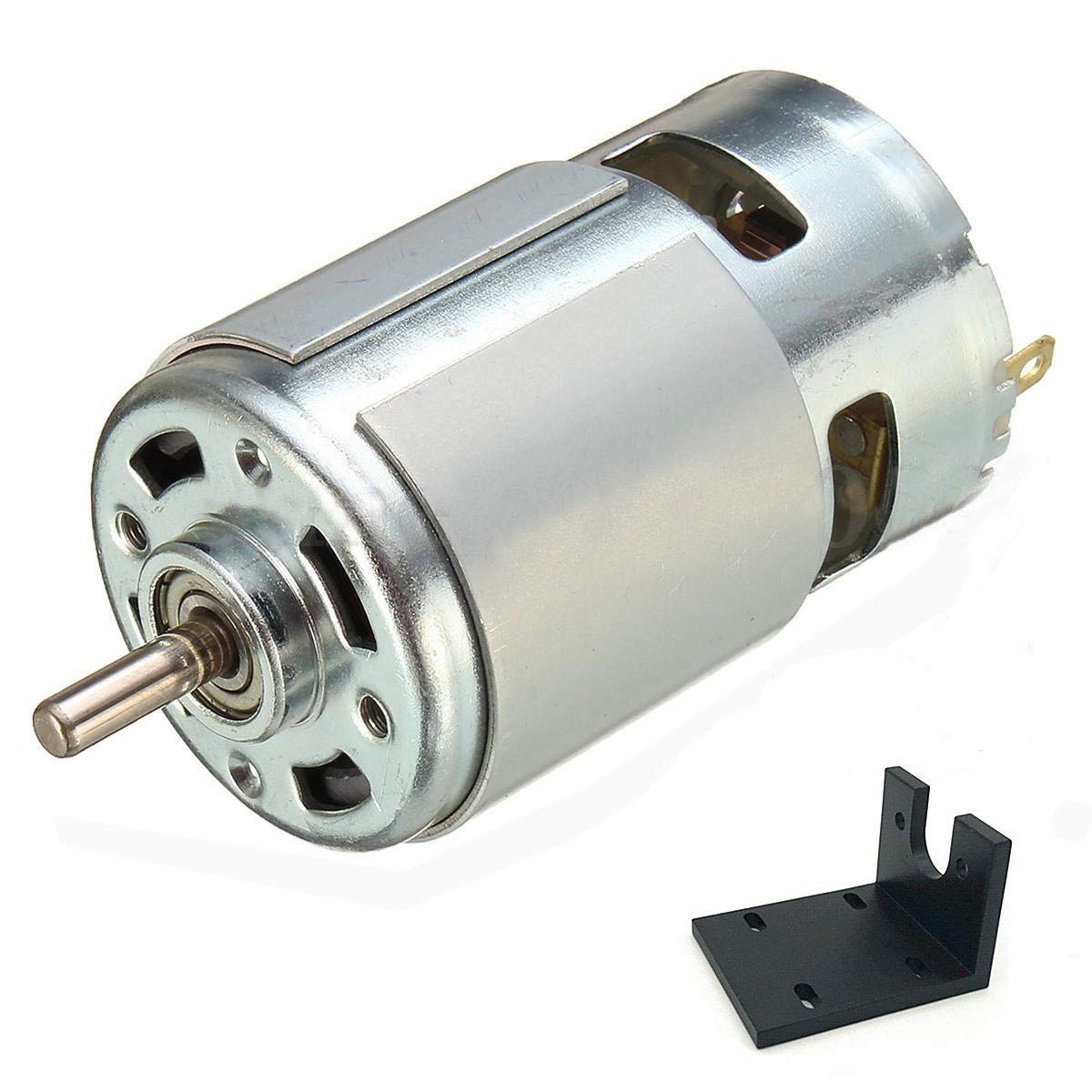
Can DC motors be used in robotics, and if so, what are some notable applications?
Yes, DC (Direct Current) motors can be used in robotics, and they are widely employed in various robotic applications. DC motors offer several advantages that make them suitable for robotic systems, including their controllability, compact size, and versatility. Here’s a detailed explanation of how DC motors are used in robotics and some notable applications:
DC Motors in Robotics:
DC motors are commonly used in robotics due to their ability to provide precise speed control and torque output. They can be easily controlled by adjusting the voltage applied to the motor, allowing for accurate and responsive motion control in robotic systems. Additionally, DC motors can be designed in compact sizes, making them suitable for applications with limited space and weight constraints.
There are two main types of DC motors used in robotics:
- DC Brushed Motors: These motors have a commutator and carbon brushes that provide the electrical connection to the rotating armature. They are relatively simple in design and cost-effective. However, they may require maintenance due to brush wear.
- DC Brushless Motors: These motors use electronic commutation instead of brushes, resulting in improved reliability and reduced maintenance requirements. They are often more efficient and offer higher power density compared to brushed motors.
Notable Applications of DC Motors in Robotics:
DC motors find applications in various robotic systems across different industries. Here are some notable examples:
1. Robotic Manipulators: DC motors are commonly used in robotic arms and manipulators to control the movement of joints and end-effectors. They provide precise control over position, speed, and torque, allowing robots to perform tasks such as pick-and-place operations, assembly, and material handling in industrial automation, manufacturing, and logistics.
2. Mobile Robots: DC motors are extensively utilized in mobile robots, including autonomous vehicles, drones, and rovers. They power the wheels or propellers, enabling the robot to navigate and move in different environments. DC motors with high torque output are particularly useful for off-road or rugged terrain applications.
3. Humanoid Robots: DC motors play a critical role in humanoid robots, which aim to replicate human-like movements and capabilities. They are employed in various joints, including those of the head, arms, legs, and hands, allowing humanoid robots to perform complex movements and tasks such as walking, grasping objects, and facial expressions.
4. Robotic Exoskeletons: DC motors are used in robotic exoskeletons, which are wearable devices designed to enhance human strength and mobility. They provide the necessary actuation and power for assisting or augmenting human movements, such as walking, lifting heavy objects, and rehabilitation purposes.
5. Educational Robotics: DC motors are popular in educational robotics platforms and kits, including those used in schools, universities, and hobbyist projects. They provide a cost-effective and accessible way for students and enthusiasts to learn about robotics, programming, and control systems.
6. Precision Robotics: DC motors with high-precision control are employed in applications that require precise positioning and motion control, such as robotic surgery systems, laboratory automation, and 3D printing. The ability of DC motors to achieve accurate and repeatable movements makes them suitable for tasks that demand high levels of precision.
These are just a few examples of how DC motors are used in robotics. The flexibility, controllability, and compactness of DC motors make them a popular choice in a wide range of robotic applications, contributing to the advancement of automation, exploration, healthcare, and other industries.


editor by CX 2024-04-25