
Product Description
Product Description
EC MOTOR for Refrigeration is a high-performance electronically commutated motor, specifically designed for refrigeration and air conditioning systems. lt provides superior efficiency, precise control, and long-lasting reliability for demanding applications.
Features:
1) High Efficiency:
The EC MOTOR for Refrigeration has a brushless DC design that provides up to 70% efficiency, which is significantly higher than traditional AC motors.The motor’s integrated electronic control system continually monitors operating conditions and adjusts the motor’s speed, resulting in reduced energy consumption, lower operating costs, and longer service life.
2) Precise Control:
The motor has a smooth, continuous speed control that enables precise temperature and humidity regulation. The EC MOTOR for Refrigeration can operate at variable speeds to match system demand, making it an ideal choice forenergy-efficient systems.
3) Reduced Noise and Vibration:
The brushless DC design and electronic control systerresult in less noise and vibration compared to traditional AC motors. This makes it anexcellent choice for quiet environments
4) Compact Design:
The compact design of the EC MOTOR for Refrigeration provides a high power-to-size ratio, which makes it an ideal choice for space-constrained applications.
Specifications:
1) Voltage:
The motor operates on a range of voltages, from 100V to 240V.
2) Speed:
The motor’s speed can be controlled between 300RPM to 1800RPM depending on the application.
3) Control:
The motor features an integrated electronic control system that provides precise speed control and system monitoring.
4) Operating Temperature:
The motor can operate in a temperature range from -40°C to +50°C
Overall, the EC MOTOR for Refrigeration is a highly efficient, reliable. and precise motor designed to meet the demands of refrigeration and air conditioning applications. lts superior performance makes it an ideal choice for OEMs and system integrators looking to improve system efficiency and reliability.
As long as you are a manufacturer of super-market refrigeration equipements, or beverage cabinets, or beer coolers etc, you will be in need of our EC Brushless Motor for Fan.
Product Parameters
MDAC4810A Pro EC Brushless Motor Parameters:
| MODEL | Voltage V |
Maximum load | SPEED RPM |
Minimum noise dB(A) | Minimum vibration mm/s | Maximum power W |
Maximum efficiency % |
| MDAC4810APRO | 100-240V | 230 34° | 300-2300 | 38 | 1.1 | 20 | 75 |
| LOAD/SPEED | 200mm blade | 230mm blade | ||
| 28° | 34° | 28° | 34° | |
| 1300RPM | V | V | V | V |
| 1500RPM | V | V | V | X |
| 1800RPM | V | X | X | X |
| 2300RPM | V | X | X | X |
| Technical Parameter | |
| Nominal voltage range | 220-240VAC,100-240VAC,50/60Hz |
| Rotation speed range | 300- 1800 rpm |
| Material | PBT |
| Airflow direction | Air exhaust or airintake (depending on impeller) |
| Direction of rotation | CCW(view on drive end) |
| Degree of protection | IP65 |
| Insulation class | “B” VD, “F” UL |
| Installation position | Any |
| Mode of operation | Continuous operation (S1) |
| Bearings | Maintenance-free ball bearing system |
| Motor protection | By electronics |
| Electrical hook-up | Power cables |
| Protection class | II(without grounding conductor) |
| Approvals | CCC; EAC;VDE,EN 6571-2-24,EN 6571-2-89,EN 6571-1 |
| Fitting of attachments | Guard grille and wall ring are attached to the projecting thread ends on the |
| Mounting of axial impeller | A plastic adapter with catching peg and M4 screw is used to secure the impeller on the motor shaft |
| Ambient temperature | -40ºC-50ºC |
We continuously improve and pursue products that are more energy-efficient, stable, popular, and environmentally friendly. Compared to traditional covered pole motor products, EC has obvious advantages in high-efficiency and energy-saving electrodes, specifically:
Comparison details of MDAC4810A and 10W shaded pole motors:
1) Energy Saving
It’s power consumption is around 1/3 of Shade-pole motor to meet the same function.
Such a siginificant energy saving is what your customers always wanted, considering the huge power consumption where your equiment is used for.
It’s also meeting high energy standard of North American and European market.
2) Job Saving
We have 2 models of EC Motor that are enough to cover almost all 7 models of Shade-pole motor for different refrigeration equipements, because EC Motor is designed to be speed adjustable.
– Adjustable speed saves your job of model selection for both purchaing team and technical team.
– Long life saves your job of after-sales.
– Energy sameing saves your job of explaining to your buyers.
– Wide voltage range saves your marketing policy to different markets.
Below listed the comparasion between our EC Motor and regular Shade-pole Motor:
| EC Motor 4810A | Shade-Plole Motor 10W | |
| Input Power | 15W | 40W |
| Out Power | 9.5W | 10W |
| Voltage | 100-240V | 110V or 220V |
| Height of The Motor | 62mm +/-1 | 85mm +/-1 |
| Noise | 39.5dBA | 55dBA |
| Motor Life | 8~10years | 3~5years |
| Bearing | Ball bearing | Sleeve bearing |
| Efficient | up to 70% | Max 18% |
| Speed | 300~1800rpm | 1300rpm |
| Certificate | UL, VDE, CE, CCC, EX, Rohs | UL, VDE, CE, CCC, EX, Rohs |
| Protect Level | IP65 | IP42 |
→Click to View More EC Motors Products!!!
Company Profile
We have our own design, research and development, testing equipment, and production line. The cost-effectiveness and after-sales service of our products are guaranteed, and we can provide technical support and customized services!
Exhibition
Certifications
With abundant technique force,we have our own researching, developing, manufacturing, inspecting and testingcenters, and imported the international advanced high-tech equipments. Our company has passed the ISO9001,ISO14001,OHS18001 international management system certificates. The products have got UL,ETL,CE,CB,and CCC certificates. Our products are not only selling strongly in more than 30 provincesand municipality,but also largely exporting to Europe,America,Australia,Middle East, Africa and South Asia. We have won an excellent reputation from the customers and friends by our product quality,price versus performance ratio and service.
FAQ
Q1: Are you a manufacturer or trader?
A1: ZHangZhoug Maidi Refrigeration Technology Co., Ltd. is a Hi-tech enterprise. We own the standard plant and office building which covering 21, 000 square meters. With abundant technique force, we have our own researching, developing, manufacturing, inspecting and testing centers, and imported the international advanced equipments.
Q2: How to replace refrigerator ec motor?
A2: We have a professional team of engineers who provide technical support and online guidance on product installation and replacement.
Q3: How do you ensure quality?
A3: We have a dedicated product research and testing center with authoritative quality management system certification: ISO9001/ISO14001/OHS18001.
Q4: How much does a refrigeration part cost?
A4: Factory price for you, not cheapest but the lowest at the same quality.
| Application: | Refrigerators/Beverage Cabinets/Ice Maker, etc. |
|---|---|
| Speed: | Variable Speed |
| Number of Stator: | Three-Phase |
| Samples: |
US$ 15/Piece
1 Piece(Min.Order) | Order Sample |
|---|
| Customization: |
Available
|
|
|---|
.shipping-cost-tm .tm-status-off{background: none;padding:0;color: #1470cc}
| Shipping Cost:
Estimated freight per unit. |
about shipping cost and estimated delivery time. |
|---|
| Payment Method: |
|
|---|---|
|
Initial Payment Full Payment |
| Currency: | US$ |
|---|
| Return&refunds: | You can apply for a refund up to 30 days after receipt of the products. |
|---|
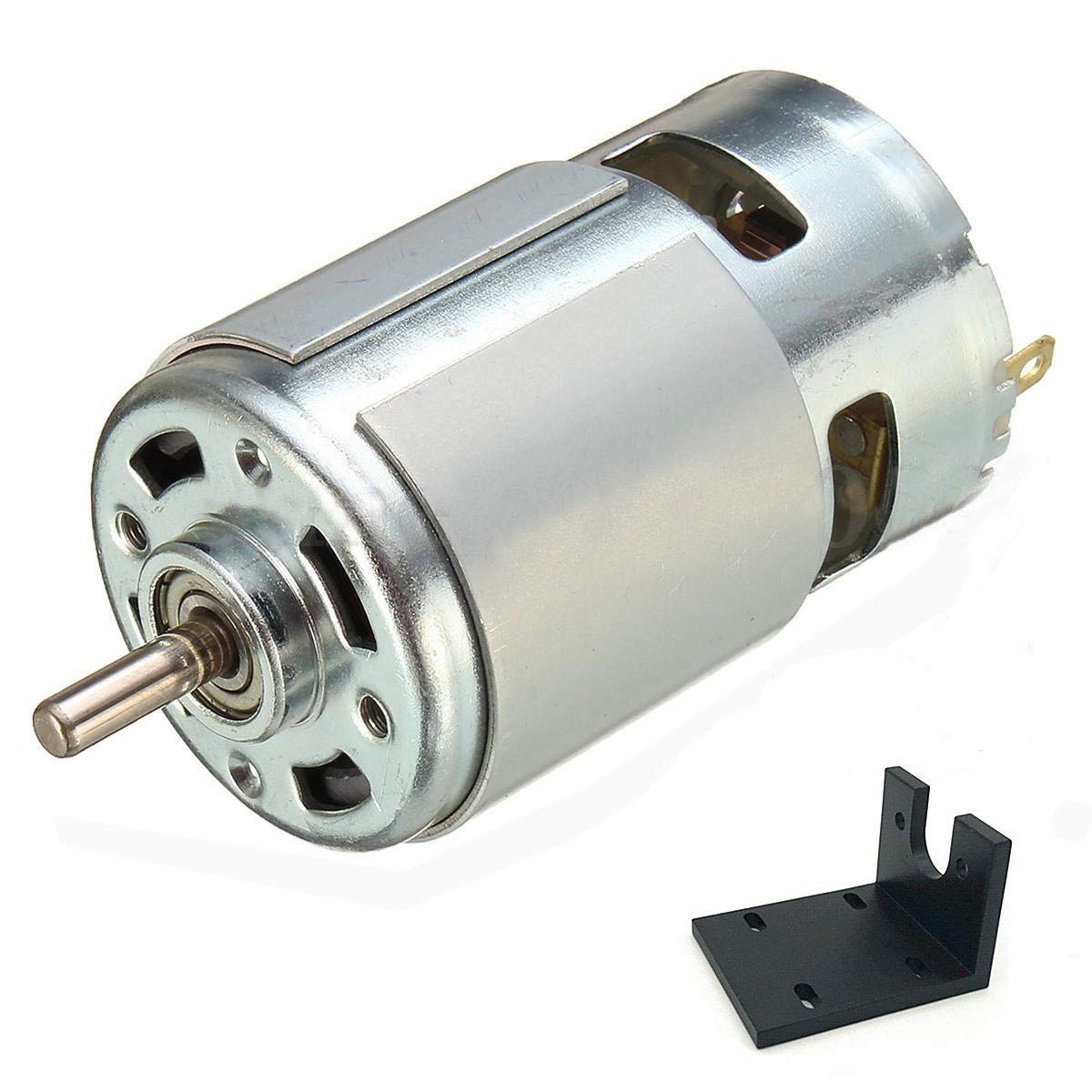
Can you explain the basic working principle behind a DC motor?
A DC (Direct Current) motor operates based on the fundamental principle of electromagnetic induction. It converts electrical energy into mechanical motion by utilizing the interaction between magnetic fields and current-carrying conductors. Here’s a detailed explanation of the basic working principle behind a DC motor:
1. Construction:
A DC motor consists of several key components:
- Stator: The stator is the stationary part of the motor and typically consists of permanent magnets or electromagnets that produce a fixed magnetic field.
- Rotor: The rotor is the moving part of the motor and is connected to the shaft. It contains coils or windings that carry the armature current.
- Armature: The armature is the core of the rotor that holds the armature windings. The windings are usually made of copper wire and are evenly spaced around the armature.
- Commutator: The commutator is a cylindrical ring attached to the rotor shaft. It consists of multiple segments, usually made of copper, that are insulated from each other.
- Brushes: The brushes are stationary contacts that make physical contact with the commutator segments. They are typically made of carbon or graphite and provide electrical connections to the armature windings.
2. Electromagnetic Induction:
When a current-carrying conductor is placed in a magnetic field, it experiences a force due to the interaction between the magnetic field and the current. This phenomenon is described by the right-hand rule, where the direction of the force is perpendicular to both the current direction and the magnetic field direction.
3. Motor Operation:
When a DC motor is powered, a DC voltage is applied to the armature windings through the brushes and commutator. The current flowing through the armature windings creates a magnetic field around the windings. This magnetic field interacts with the fixed magnetic field produced by the stator, resulting in a force that causes the rotor to rotate.
4. Commutation:
The commutation process is crucial for the continuous rotation of the rotor in a DC motor. As the rotor spins, the brushes make contact with different commutator segments, effectively reversing the direction of the current in the armature windings at the appropriate timing. This reversal of current flow ensures that the torque generated in the armature windings is always in the same direction, allowing for continuous rotation of the rotor.
5. Speed Control:
The speed of a DC motor can be controlled by varying the applied voltage. Reducing the voltage results in a decrease in the magnetic field strength, which in turn decreases the force acting on the armature windings. This reduction in force leads to a decrease in the motor’s speed. Conversely, increasing the voltage increases the speed of the motor. Precise speed control can be achieved by using electronic circuits to regulate the voltage supplied to the motor.
6. Advantages and Applications:
DC motors offer several advantages, including:
- High starting torque, making them suitable for applications requiring high initial force.
- Excellent speed control capabilities, allowing for precise and adjustable speed regulation.
- Relatively simple construction and ease of maintenance.
- Wide range of sizes and power ratings, making them adaptable to various applications.
DC motors find extensive use in numerous applications, such as robotics, industrial automation, electric vehicles, appliances, and more.
By understanding the basic working principle behind a DC motor, one can appreciate its functionality and explore its applications in different fields.
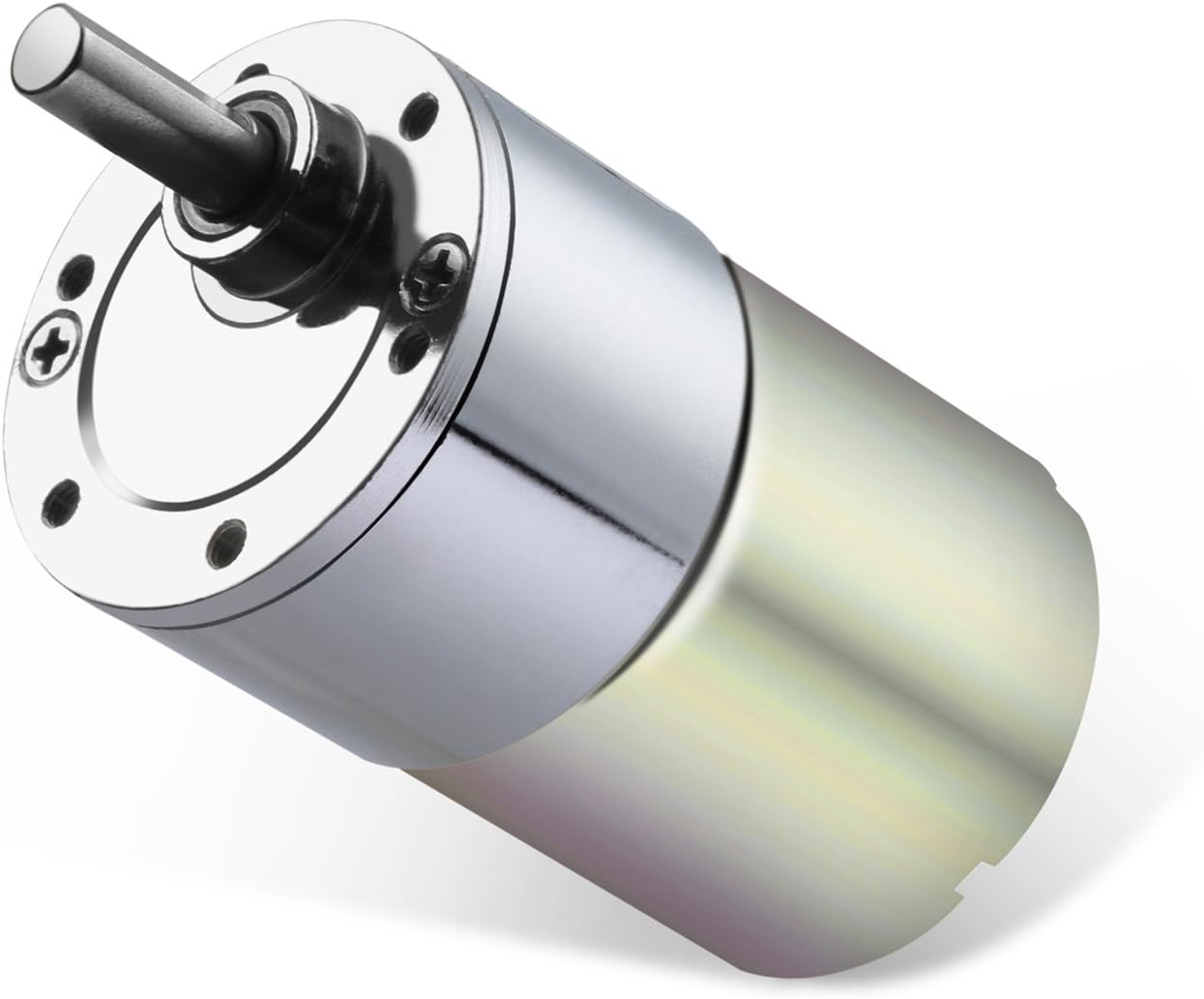
What role does commutation play in the operation of a DC motor?
In the operation of a DC (Direct Current) motor, commutation plays a crucial role in ensuring the continuous rotation of the motor and the conversion of electrical energy into mechanical motion. It is the process by which the direction of the current in the armature winding is periodically reversed to maintain a constant torque and facilitate the rotation of the motor. Here’s a detailed explanation of the role of commutation in the operation of a DC motor:
Commutation is necessary in a DC motor because the magnetic field generated by the armature winding needs to be constantly aligned with the stator’s magnetic field for efficient torque production. The stator of a DC motor typically consists of permanent magnets or electromagnets that create a fixed magnetic field. The armature winding, located on the rotor, produces a magnetic field that interacts with the stator’s field to generate torque.
The commutation process is achieved through the use of a commutator and brushes. The commutator is a cylindrical ring with multiple segments, while the brushes are conductive contacts that make physical contact with the commutator segments. The armature winding is connected to the commutator, and as the rotor spins, the brushes maintain contact with different segments.
As the rotor rotates, the commutator and brushes ensure that the direction of the current in the armature winding is reversed at specific intervals. This reversal of current flow is necessary to maintain a consistent torque in the same rotational direction. Without commutation, the torque generated by the motor would fluctuate in both magnitude and direction, leading to instability and erratic motor behavior.
The commutation process involves two stages: mechanical commutation and electrical commutation.
1. Mechanical Commutation: As the rotor rotates, the brushes make contact with different segments of the commutator. The segments are insulated from each other to prevent short circuits. When the brushes move from one segment to another, the current flowing through the armature winding is switched to a different coil or set of coils. This mechanical switching ensures that the magnetic fields produced by the winding are properly aligned with the stator’s field, resulting in continuous torque production.
2. Electrical Commutation: The reversal of current in the armature winding is achieved through electrical commutation. When the brushes make contact with a new commutator segment, the current flow in the winding is redirected to maintain the desired torque direction. The timing and sequence of the current reversal are critical to ensure smooth and efficient motor operation.
The commutation process in a DC motor is a dynamic and continuous operation. It allows for the conversion of electrical energy into mechanical motion by providing a consistent torque output. The efficiency and performance of the motor are greatly influenced by the quality and effectiveness of the commutation process.
In summary, commutation plays a vital role in the operation of a DC motor by ensuring the continuous rotation of the motor and the production of consistent torque. It involves the mechanical and electrical switching of the current direction in the armature winding, facilitated by the commutator and brushes.
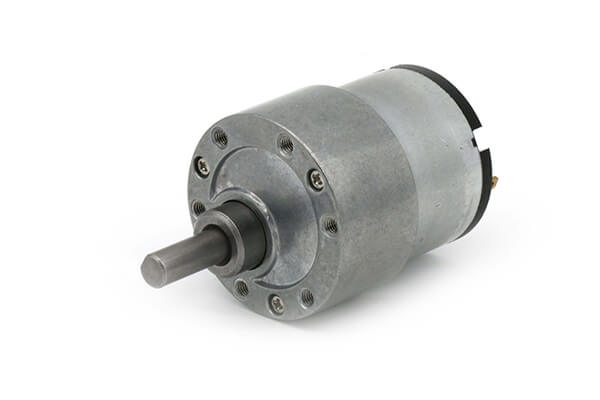
Where can individuals find reliable resources for learning more about DC motors and their applications?
Individuals seeking reliable resources to learn more about DC (Direct Current) motors and their applications can explore various sources that provide comprehensive and accurate information. Here’s a detailed explanation of where individuals can find reliable resources for learning about DC motors:
1. Manufacturer Websites:
Many DC motor manufacturers have dedicated sections on their websites that provide detailed information about their products, including specifications, application notes, technical guides, and whitepapers. These resources offer valuable insights into the design, operation, and application considerations of DC motors. Examples of reputable DC motor manufacturers include Baldor, Maxon Motor, and Faulhaber.
2. Industry Associations and Organizations:
Industry associations and organizations related to electrical engineering, automation, and motor technology can be excellent sources of reliable information. Examples include the Institute of Electrical and Electronics Engineers (IEEE) and the American Society of Mechanical Engineers (ASME). These associations often provide access to technical publications, research papers, conferences, and educational resources related to DC motors and their applications.
3. Technical Books and Publications:
Technical books and publications authored by experts in the field of electrical engineering and motor technology can provide in-depth knowledge about DC motors. Books such as “Electric Motors and Drives: Fundamentals, Types, and Applications” by Austin Hughes and “Practical Electric Motor Handbook” by Irving Gottlieb are widely regarded as reliable resources for learning about DC motors and their applications.
4. Online Educational Platforms:
Online educational platforms offer a wealth of resources for learning about DC motors. Websites like Coursera, Udemy, and Khan Academy provide online courses, tutorials, and video lectures on electrical engineering, motor theory, and applications. These platforms often have courses specifically dedicated to DC motors, covering topics such as motor principles, control techniques, and practical applications.
5. Research Papers and Scientific Journals:
Research papers published in scientific journals and conference proceedings can provide detailed insights into the latest advancements and research findings related to DC motors. Platforms like IEEE Xplore, ScienceDirect, and Google Scholar can be used to search for scholarly articles on DC motors. These papers are authored by researchers and experts in the field and provide reliable and up-to-date information on various aspects of DC motor technology.
6. Online Forums and Communities:
Online forums and communities focused on electrical engineering, motor technology, and DIY projects can be valuable resources for learning about DC motors. Platforms like Reddit, Stack Exchange (Electrical Engineering section), and specialized motor forums provide opportunities to ask questions, engage in discussions, and learn from experienced individuals in the field. However, it’s important to verify information obtained from online forums as they may contain a mix of opinions and varying levels of expertise.
When accessing these resources, it’s essential to critically evaluate the information and cross-reference it with multiple sources to ensure accuracy and reliability. By utilizing a combination of manufacturer websites, industry associations, technical books, online educational platforms, research papers, and online communities, individuals can gain a comprehensive understanding of DC motors and their applications.


editor by CX 2023-12-01