
Product Description
Product Description
We are 1 OEM Manufacturer for various dump truck environmental cover motor, dump truck tarp motor, rolling tarp system motor, clay target trap machine motor etc, its DC gear motor on truck tarpaulin system for rear tipper, agricultural carts, skip loader, tipper truck.
tarp gear motor and Dump Truck Tarp Motor Features:
1.Gear Ratio: 1200:1
2. 24 Volt: 450W-600W, low speed
3. Output power: 200 watts or 0.26 horsepower
3. Oil-bathed gear box
4. O-ring sealed housing
5. 1 is dump truck cover, second is tarpaulin (canvas) rolled CHINAMFG and backward
6. Brand new, sealed in the box
7. Heavy Duty Applications: dump truck spareparts for Aero, Roll -Rite, US Tarp, Donovan
Detailed Photos
Product Parameters
(1) left-right flip tarp motor type: Voltage: 24V DC, rated power: 450W, output speed: 1–5 rpm, gear ratio 1200:1
(2) rolled CHINAMFG and backward tarp motor type:
big torque product: 24V DC, rated power:800W; output speed:45 rpm; gear ratio: 40:1, 57N.m;
middle torque product: 24V DC, rated power:650W; output speed:60 rpm; gear ratio: 40:1, 46N.m;
small torque product: 24V DC, rated power:300W; output speed:45 rpm; gear ratio: 50:1 or 60:1, 30 N.m;
Packaging & Shipping
Our Advantages
After Sales Service
Our Core range of DC motors, electric transaxle motor, wheelchair motor and gearboxes are specifically designed to be interchangeable and versatile, this helps us keep lower stock levels while achieving the customization necessary for so many applications. The core offer has also enabled us to offer excellent pricing levels for low quantities, often prototypes are very expensive due to lack of economies of scale we have tried to help with this as much as possible. HangZhou CHINAMFG can offer bespoke units for larger quantities and offer a Supply Chain service where we work closely with our customers to identify the optimal delivery schedule in accordance with OEM production levels. If you are looking for DC motors, wiper motors, electric transaxle motor, wheelchair motor and gearboxes, you have come to the right place, our expert technical sales staff will recommend the best possible option for both your application and your pocket. Contact us now to discuss your application.
HangZhou CHINAMFG TRADE CO., LTD is responsible for exporting the above products, and we also import some important products from oversea markets.
Our company has got the right of import and export from the Government department.
It is necessary to get your specific requirement when contacting us,
(1) for example of motor, voltage, power, speed, output torque, connecting type and size of shaft, outside structure drawing or relevant pictures etc.
(2) for example of electric transaxle, confirm its wheel base, power, voltage, industry field, running speed, wheel tyre’s diameter and width, loaded weight etc, and then we will give the accurate offers.
Therefore, hope to get your feedback soon.
Please watch our process steps as below
(1) process these output shafts
(2)process these spur gears and sprockets
(3) turning machining
(4) assembly preparation
(5) assembly workshop
(6) inspection test before shipment
CHOOSE US FOR:
1. We offer engineer suggestion to your specified design in production improvement and cost saving.
2. R&D and QC department focus on the products to meet your strict requirements.
3. Different surface treatments available, plating, power coating, painting, anodized,polishing, electrophoresis, etc.
4. Different dimensions according to buyer’s request.
5. Various packagings according to specific requirements.
6. Customized and tailored orders are welcome.
7. Good quality and Quick action.
8. Our products have been exported to America, Australia,German,Korea,Indian.
CONFIDENTIAL POLICY:
1) The appointed products are only for you.
2) Your informations&documents are confidential.
3) Your drawings&sketch are confidential.
FAQ
Question:
1.Q:How about mould cost?
A: primarily depend on : 1.Drawing, 2.material, 3.weight and quantity.
We need to know the structure of each parts to analyze the mold solution by:
1) –Complete design drawing or actual sample —– the best way
–PDF drawing with complete dimension for each parts
–Clearly photos for each parts with more angle-views to show every features.
2)The materials and surface treatments.
3)The quantity of order.
2.Q:How to control the product processing?
A: The processing report or pictures will be sent to the customer every week/ each month for review.
3.Q:Who will own the mould?
A:Customer, also the mould can be kept in our factory for future order.
4.Q:How long do you make your quotation?
A:After receiving detail informations we will quote in 1 to 3 days.
5.Q: Are the samples/prototype free of charge?
A: charged,but it will be returned to buyer when an order confirmed and order quantity is over 5000 pcs.
After your drawing confirmed and charges done for the prototype, we will produce a sample
by CNC machining. And the first trial samples (1-3pcs) will be shipped to buyer
by the DHL /Fedex at buyer’s express account or prepay the express charges.
MOQ? — 100units and accept sample order.
/* January 22, 2571 19:08:37 */!function(){function s(e,r){var a,o={};try{e&&e.split(“,”).forEach(function(e,t){e&&(a=e.match(/(.*?):(.*)$/))&&1
| Application: | Universal, Industrial, Truck |
|---|---|
| Operating Speed: | Adjust Speed |
| Excitation Mode: | Compound |
| Function: | Driving |
| Casing Protection: | Protection Type |
| Number of Poles: | 8 |
| Samples: |
US$ 238/Piece
1 Piece(Min.Order) | |
|---|
| Customization: |
Available
|
|
|---|
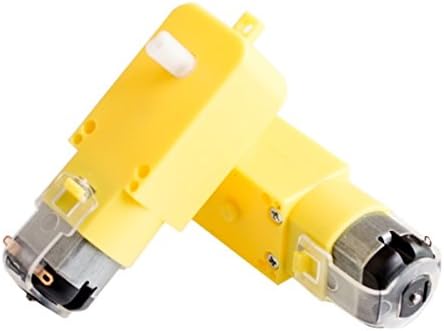
Where can individuals find reliable resources for learning more about gear motors and their applications?
Individuals seeking to learn more about gear motors and their applications have access to various reliable resources that provide valuable information and insights. Here are some sources where individuals can find reliable information about gear motors:
1. Manufacturer Websites:
Manufacturer websites are a primary source of information about gear motors. Gear motor manufacturers often provide detailed product specifications, application guides, technical documentation, and educational materials on their websites. These resources offer insights into different gear motor types, features, performance characteristics, and application considerations. Manufacturer websites are a reliable and convenient starting point for learning about gear motors.
2. Industry Associations and Organizations:
Industry associations and organizations related to mechanical engineering, automation, and motion control often have resources and publications dedicated to gear motors. These organizations provide technical articles, whitepapers, industry standards, and guidelines related to gear motor design, selection, and application. Examples of such associations include the American Gear Manufacturers Association (AGMA), International Electrotechnical Commission (IEC), and Institute of Electrical and Electronics Engineers (IEEE).
3. Technical Publications and Journals:
Technical publications and journals focused on engineering, robotics, and motion control are valuable sources of in-depth knowledge about gear motors. Publications like IEEE Transactions on Industrial Electronics, Mechanical Engineering magazine, or Motion System Design magazine often feature articles, case studies, and research papers on gear motor technology, advancements, and applications. These publications provide authoritative and up-to-date information from industry experts and researchers.
4. Online Forums and Communities:
Online forums and communities dedicated to engineering, robotics, and automation can be excellent resources for discussions, insights, and practical experiences related to gear motors. Websites like Stack Exchange, engineering-focused subreddits, or specialized forums provide platforms for individuals to ask questions, share knowledge, and engage in discussions with professionals and enthusiasts in the field. Participating in these communities allows individuals to learn from real-world experiences and gain practical insights.
5. Educational Institutions and Courses:
Technical colleges, universities, and vocational training centers often offer courses or programs in mechanical engineering, mechatronics, or automation that cover gear motor fundamentals and applications. These educational institutions provide comprehensive curricula, textbooks, and lecture materials that can serve as reliable resources for individuals interested in learning about gear motors. Additionally, online learning platforms like Coursera, Udemy, or LinkedIn Learning offer courses on topics related to gear motors and motion control.
6. Trade Shows and Exhibitions:
Attending trade shows, exhibitions, and industry conferences related to automation, robotics, or motion control provides opportunities to learn about the latest advancements in gear motor technology. These events often feature product demonstrations, technical presentations, and expert panels where individuals can interact with gear motor manufacturers, industry experts, and other professionals. It’s a great way to stay updated on the latest trends, innovations, and applications of gear motors.
When seeking reliable resources, it’s important to consider the credibility of the source, the expertise of the authors, and the relevance to the specific area of interest. By leveraging these resources, individuals can gain a comprehensive understanding of gear motors and their applications, from basic principles to advanced topics, enabling them to make informed decisions and effectively utilize gear motors in their projects or applications.
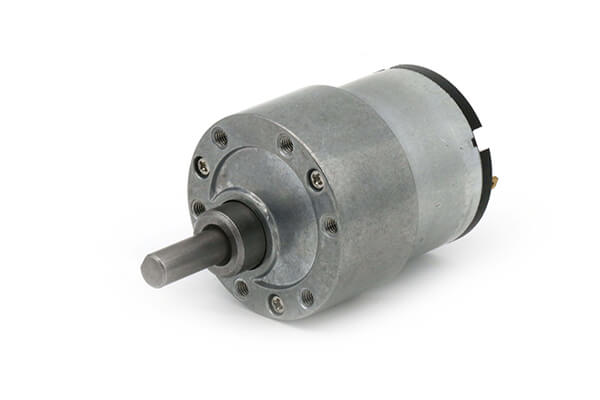
Can gear motors be used for precise positioning, and if so, what features enable this?
Yes, gear motors can be used for precise positioning in various applications. The combination of gear mechanisms and motor control features enables gear motors to achieve accurate and repeatable positioning. Here’s a detailed explanation of the features that enable gear motors to be used for precise positioning:
1. Gear Reduction:
One of the key features of gear motors is their ability to provide gear reduction. Gear reduction refers to the process of reducing the output speed of the motor while increasing the torque. By using the appropriate gear ratio, gear motors can achieve finer control over the rotational movement, allowing for more precise positioning. The gear reduction mechanism enables the motor to rotate at a slower speed while maintaining higher torque, resulting in improved accuracy and control.
2. High Resolution Encoders:
Many gear motors are equipped with high-resolution encoders. An encoder is a device that measures the position and speed of the motor shaft. High-resolution encoders provide precise feedback on the motor’s rotational position, allowing for accurate position control. The encoder signals are used in conjunction with motor control algorithms to ensure precise positioning by monitoring and adjusting the motor’s movement in real-time. The use of high-resolution encoders greatly enhances the gear motor’s ability to achieve precise and repeatable positioning.
3. Closed-Loop Control:
Gear motors with closed-loop control systems offer enhanced positioning capabilities. Closed-loop control involves continuously comparing the actual motor position (as measured by the encoder) with the desired position and making adjustments to minimize any position error. The closed-loop control system uses feedback from the encoder to adjust the motor’s speed, direction, and torque, ensuring accurate positioning even in the presence of external disturbances or variations in the load. Closed-loop control enables gear motors to actively correct for position errors and maintain precise positioning over time.
4. Stepper Motors:
Stepper motors are a type of gear motor that provides excellent precision and control for positioning applications. Stepper motors operate by converting electrical pulses into incremental steps of movement. Each step corresponds to a specific angular displacement, allowing precise positioning control. Stepper motors offer high step resolution, allowing for fine position adjustments. They are commonly used in applications that require precise positioning, such as robotics, 3D printers, and CNC machines.
5. Servo Motors:
Servo motors are another type of gear motor that excels in precise positioning tasks. Servo motors combine a motor, a feedback device (such as an encoder), and a closed-loop control system. They offer high torque, high speed, and excellent positional accuracy. Servo motors are capable of dynamically adjusting their speed and torque to maintain the desired position accurately. They are widely used in applications that require precise and responsive positioning, such as industrial automation, robotics, and camera pan-tilt systems.
6. Motion Control Algorithms:
Advanced motion control algorithms play a crucial role in enabling gear motors to achieve precise positioning. These algorithms, implemented in motor control systems or dedicated motion controllers, optimize the motor’s behavior to ensure accurate positioning. They take into account factors such as acceleration, deceleration, velocity profiling, and jerk control to achieve smooth and precise movements. Motion control algorithms enhance the gear motor’s ability to start, stop, and position accurately, reducing position errors and overshoot.
By leveraging gear reduction, high-resolution encoders, closed-loop control, stepper motors, servo motors, and motion control algorithms, gear motors can be effectively used for precise positioning in various applications. These features enable gear motors to achieve accurate and repeatable positioning, making them suitable for tasks that require precise control and reliable positioning performance.
In which industries are gear motors commonly used, and what are their primary applications?
Gear motors find widespread use in various industries due to their versatility, reliability, and ability to provide controlled mechanical power. They are employed in a wide range of applications that require precise power transmission and speed control. Here’s a detailed explanation of the industries where gear motors are commonly used and their primary applications:
1. Robotics and Automation:
Gear motors play a crucial role in robotics and automation industries. They are used in robotic arms, conveyor systems, automated assembly lines, and other robotic applications. Gear motors provide the required torque, speed control, and directional control necessary for the precise movements and operations of robots. They enable accurate positioning, gripping, and manipulation tasks in industrial and commercial automation settings.
2. Automotive Industry:
The automotive industry extensively utilizes gear motors in various applications. They are used in power windows, windshield wipers, HVAC systems, seat adjustment mechanisms, and many other automotive components. Gear motors provide the necessary torque and speed control for these systems, enabling smooth and efficient operation. Additionally, gear motors are also utilized in electric and hybrid vehicles for powertrain applications.
3. Manufacturing and Machinery:
Gear motors find wide application in the manufacturing and machinery sector. They are used in conveyor belts, packaging equipment, material handling systems, industrial mixers, and other machinery. Gear motors provide reliable power transmission, precise speed control, and torque amplification, ensuring efficient and synchronized operation of various manufacturing processes and machinery.
4. HVAC and Building Systems:
In heating, ventilation, and air conditioning (HVAC) systems, gear motors are commonly used in damper actuators, control valves, and fan systems. They enable precise control of airflow, temperature, and pressure, contributing to energy efficiency and comfort in buildings. Gear motors also find applications in automatic doors, blinds, and gate systems, providing reliable and controlled movement.
5. Marine and Offshore Industry:
Gear motors are extensively used in the marine and offshore industry, particularly in propulsion systems, winches, and cranes. They provide the required torque and speed control for various marine operations, including steering, anchor handling, cargo handling, and positioning equipment. Gear motors in marine applications are designed to withstand harsh environments and provide reliable performance under demanding conditions.
6. Renewable Energy Systems:
The renewable energy sector, including wind turbines and solar tracking systems, relies on gear motors for efficient power generation. Gear motors are used to adjust the rotor angle and position in wind turbines, optimizing their performance in different wind conditions. In solar tracking systems, gear motors enable the precise movement and alignment of solar panels to maximize sunlight capture and energy production.
7. Medical and Healthcare:
Gear motors have applications in the medical and healthcare industry, including in medical equipment, laboratory devices, and patient care systems. They are used in devices such as infusion pumps, ventilators, surgical robots, and diagnostic equipment. Gear motors provide precise control and smooth operation, ensuring accurate dosing, controlled movements, and reliable functionality in critical medical applications.
These are just a few examples of the industries where gear motors are commonly used. Their versatility and ability to provide controlled mechanical power make them indispensable in numerous applications requiring torque amplification, speed control, directional control, and load distribution. The reliable and efficient power transmission offered by gear motors contributes to the smooth and precise operation of machinery and systems in various industries.


editor by CX 2024-04-04