
Product Description
Product Description
1/4HP High Efficiency Brushless DC BLDC/EC Air Cooler Fan Motor for Outdoor Air Conditioning Units
The above mentioned specification is representative specification,can also be designed and manufactured according to customer requirements.
Main Technical Data of 1/4HP High Efficiency Brushless DC BLDC Air Cooler Fan Motor for Outdoor Air Conditioning Units :
| Model |
Voltage (V) |
Current (A) |
Speed (r/min) |
Output (W) |
Input (W) |
Insulation |
|
ZWS65-10A |
Vdc 310-360 | 0.27 | 300-1500 | 65 | 81.5 | B |
| ZWS80-10A | Vdc 310-360 | 0.32 | 300-1500 | 80 | 100 | B |
| ZWS120-10A | Vdc 310-360 | 0.49 | 300-1500 | 120 | 150 | B |
| ZWS150-10A | Vdc 310-360 | 0.61 | 300-1500 | 150 | 188 | B |
| ZWS200-10A | Vdc 310-360 | 0.81 | 300-1500 | 200 | 250 | B |
| ZWS230-10A | Vdc 310-360 | 1.1 | 300-1500 | 230 | 313 | B |
| Low noise | IP 44 protection level , Locked rotor protection, Open phase protection, Over-voltage protection, Over-current overheating protection |
High efficiency, Wide speed adjustment range, VSP mode |
Programmable |
Materials :
1. Silent bearing
2. Driving board
3. Copper wire
Are you tired of dealing with noisy, power-hungry air conditioner fan motors in your home or office?
If so, we have the perfect solution for you: our brushless high efficiency conditioner fan motor.
Our motor is designed to be more energy-efficient than traditional fan motors, which means you’ll save money on your power bills while enjoying the same cooling performance. Plus, it’s brushless, so it’s much quieter than standard motors and has a longer lifespan.
Here are some of the benefits of choosing our brushless high efficiency conditioner fan motor:
1) Energy-efficient: Save money on your power bills while enjoying cool air.
2) Quiet: Say goodbye to noisy fan motors that disrupt your peace and quiet.
3) Long lifespan: Our motor is designed to last for years, so you won’t have to worry about replacing it anytime soon.
4) Environmentally-friendly: Our motor is designed with sustainability in mind, so you can feel good about choosing an eco-friendly option
We are looking forward to helping you stay cool and comfortable all year round.
Application
Application:
Air purifier
Chiller
Split air conditioning outdoor unit
Air source heat pump
Refrigerator
Freezer
Cold room
Field of Application :
1. Commercial refrigeration
2. Household refrigeration
3. Refrigerated freight systems
4. Air purification
Product Parameters
Performance:
DC 310V
Power output up to:250W
Variable operation speed
Drawing of 1/4HP High Efficiency Brushless DC BLDC Air Cooler Fan Motor for Outdoor Air Conditioning Units:
Recommendation
1/4HP High Efficiency Brushless DC BLDC/EC Air Cooler Fan Motor for Outdoor Air Conditioning Units:
| Model | Voltage | Current | Speed | Output | Input | Insulation | |
| (V) | (A) | (r/min) | (W) | (W) | |||
| ZWS65-10B | Vdc 310-360 | 0.27 | 300-1500 | 65 | 81.5 | B | |
| ZWS80-10B | Vdc 310-360 | 0.32 | 300-1500 | 80 | 100 | B | |
| ZWS120-10B | Vdc 310-360 | 0.49 | 300-1500 | 120 | 150 | B | |
| ZWS150-10B | Vdc 310-360 | 0.61 | 300-1500 | 150 | 188 | B | |
| ZWS200-10B | Vdc 310-360 | 0.81 | 300-1500 | 200 | 250 | B | |
| ZWS230-10B | Vdc 310-360 | 1.1 | 300-1500 | 230 | 313 | B |
| Model | Voltage | Current | Speed | Output | Input | Insulation | |
| (V) | (A) | (r/min) | (W) | (W) | |||
| ZWS65-10A | Vdc 310-360 | 0.27 | 300-1500 | 65 | 81.5 | B | |
| ZWS80-10A | Vdc 310-360 | 0.32 | 300-1500 | 80 | 100 | B | |
| ZWS120-10A | Vdc 310-360 | 0.49 | 300-1500 | 120 | 150 | B | |
| ZWS150-10A | Vdc 310-360 | 0.61 | 300-1500 | 150 | 188 | B | |
| ZWS200-10A | Vdc 310-360 | 0.81 | 300-1500 | 200 | 250 | B | |
| ZWS230-10A | Vdc 310-360 | 1.1 | 300-1500 | 230 | 313 | B |
Terms
Terms:
1. Trade Terms: FOB, CIF, CNF, EXW, DOOR TO DOOR.
2. Payment Terms: T/T, L/C, Western Union.
3. Payment Condition: 50% deposit in advance, 50% balance before delivery.
4. Delivery Time: 15-30 days after deposit (if T/T).
5. Shipping: By sea, by air and by express delivery
Company Profile
| HangZhou CHINAMFG Electric Co., Ltd was established in 2013. Is a manufacturer focused on innovative motor solutions for the residential and commercial CHINAMFG and refrigeration industries. The company has a skilled R & D team, and has more than 10 years of motor research and development, design, production and sales experience.With an annual output of 1 million motor production capacity. The new generation of BLDC motors and EC motors developed by CHINAMFG use a unique high flux and shock absorption design, coupled with high-quality bearings, so that the motor has more torque in the same. CARLYI branded motors have been approved by CCC, ISO9001, CE, RoHS certification. |
Packaging & Shipping
Packing and Xihu (West Lake) Dis.:
FAQ
FAQ of 1/4HP High Efficiency Brushless DC BLDC Air Cooler Fan Motor for Outdoor Air Conditioning Units:
Q1: Are you factory?
A: Yes, we have been in designing and providing excellent motors for customers. Our factory production is all under ISO9001 quality management system.
Q2: How long you could prepare samples?
A: Normally 3 days if we have the sample in hand. If customized one, about a week around
Q3: How about batch order production?
A: Normally 15-30 days, the customized or newly developed products may take more half month.
Q4: Do you inspect the finished products?
A: Yes, we do inspection according to ISO9001 standard and ruled by our experienced QC staff.
Q5: What advantage do you have?
A: For the motors, we have long enough of 18months guarantee, and for the service, we offer 24 hours technical support and barrier-free communication.
/* March 10, 2571 17:59:20 */!function(){function s(e,r){var a,o={};try{e&&e.split(“,”).forEach(function(e,t){e&&(a=e.match(/(.*?):(.*)$/))&&1
| Application: | Universal, Household Appliances, Used in Fan-Coil Unit of Central Air Conditioner |
|---|---|
| Operating Speed: | 300~1500 R/Min |
| Function: | Energy Saving, High Efficiency and Low Noise |
| Samples: |
US$ 150/Piece
1 Piece(Min.Order) | Order Sample |
|---|
| Customization: |
Available
|
|
|---|
.shipping-cost-tm .tm-status-off{background: none;padding:0;color: #1470cc}
|
Shipping Cost:
Estimated freight per unit. |
about shipping cost and estimated delivery time. |
|---|
| Payment Method: |
|
|---|---|
|
Initial Payment Full Payment |
| Currency: | US$ |
|---|
| Return&refunds: | You can apply for a refund up to 30 days after receipt of the products. |
|---|
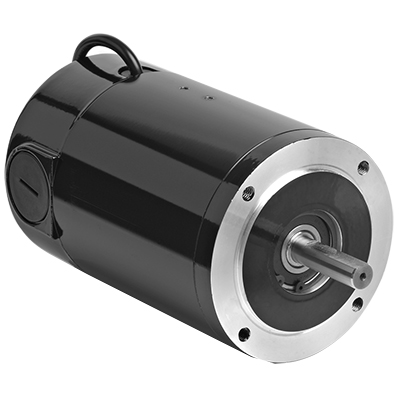
How does the speed control of a DC motor work, and what methods are commonly employed?
The speed control of a DC (Direct Current) motor is essential for achieving precise control over its rotational speed. Various methods can be employed to regulate the speed of a DC motor, depending on the specific application requirements. Here’s a detailed explanation of how speed control of a DC motor works and the commonly employed methods:
1. Voltage Control:
One of the simplest methods to control the speed of a DC motor is by varying the applied voltage. By adjusting the voltage supplied to the motor, the electromotive force (EMF) induced in the armature windings can be controlled. According to the principle of electromagnetic induction, the speed of the motor is inversely proportional to the applied voltage. Therefore, reducing the voltage decreases the speed, while increasing the voltage increases the speed. This method is commonly used in applications where a simple and inexpensive speed control mechanism is required.
2. Armature Resistance Control:
Another method to control the speed of a DC motor is by varying the armature resistance. By inserting an external resistance in series with the armature windings, the total resistance in the circuit increases. This increase in resistance reduces the armature current, thereby reducing the motor’s speed. Conversely, reducing the resistance increases the armature current and the motor’s speed. However, this method results in significant power loss and reduced motor efficiency due to the dissipation of excess energy as heat in the external resistance.
3. Field Flux Control:
Speed control can also be achieved by controlling the magnetic field strength of the motor’s stator. By altering the field flux, the interaction between the armature current and the magnetic field changes, affecting the motor’s speed. This method can be accomplished by adjusting the field current through the field windings using a field rheostat or by employing a separate power supply for the field windings. By increasing or decreasing the field flux, the speed of the motor can be adjusted accordingly. This method offers good speed regulation and efficiency but requires additional control circuitry.
4. Pulse Width Modulation (PWM):
Pulse Width Modulation is a widely used technique for speed control in DC motors. It involves rapidly switching the applied voltage on and off at a high frequency. The duty cycle, which represents the percentage of time the voltage is on, is varied to control the effective voltage applied to the motor. By adjusting the duty cycle, the average voltage across the motor is modified, thereby controlling its speed. PWM provides precise speed control, high efficiency, and low power dissipation. It is commonly employed in applications such as robotics, industrial automation, and electric vehicles.
5. Closed-Loop Control:
In closed-loop control systems, feedback from the motor’s speed or other relevant parameters is used to regulate the speed. Sensors such as encoders or tachometers measure the motor’s actual speed, which is compared to the desired speed. The difference, known as the error signal, is fed into a control algorithm that adjusts the motor’s input voltage or other control parameters to minimize the error and maintain the desired speed. Closed-loop control provides excellent speed regulation and accuracy, making it suitable for applications that require precise speed control, such as robotics and CNC machines.
These methods of speed control provide flexibility and adaptability to various applications, allowing DC motors to be effectively utilized in a wide range of industries and systems.
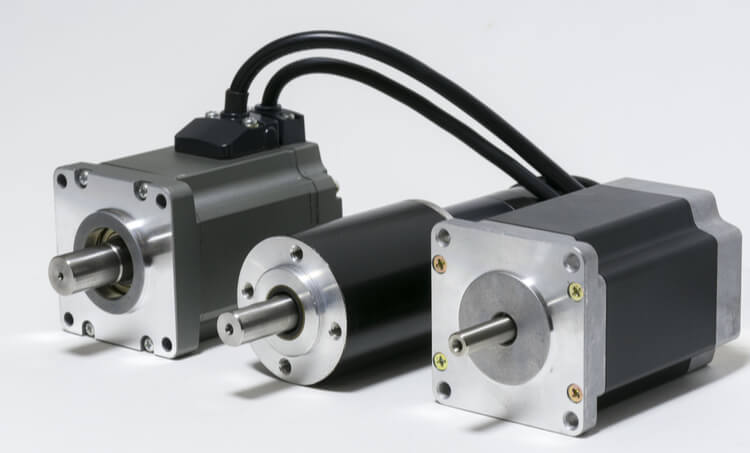
How do DC motors compare to AC motors in terms of performance and efficiency?
When comparing DC (Direct Current) motors and AC (Alternating Current) motors, several factors come into play, including performance and efficiency. Here’s a detailed explanation of how DC motors and AC motors compare in terms of performance and efficiency:
1. Performance:
Speed Control: DC motors typically offer better speed control compared to AC motors. DC motors can be easily controlled by varying the voltage applied to the armature, allowing for precise and smooth speed regulation. On the other hand, AC motors rely on complex control methods such as variable frequency drives (VFDs) to achieve speed control, which can be more challenging and costly.
Starting Torque: DC motors generally provide higher starting torque compared to AC motors. The presence of a separate field winding in DC motors allows for independent control of the field current, enabling higher torque during motor startup. AC motors, especially induction motors, typically have lower starting torque, requiring additional starting mechanisms or devices.
Reversibility: DC motors offer inherent reversibility, meaning they can easily change their rotational direction by reversing the polarity of the applied voltage. AC motors, particularly induction motors, require more complex control mechanisms to achieve reversible operation.
Dynamic Response: DC motors have faster dynamic response characteristics compared to AC motors. They can quickly accelerate or decelerate, making them suitable for applications that require rapid changes in speed or precise control, such as robotics or servo systems.
2. Efficiency:
Full Load Efficiency: AC motors, especially three-phase induction motors, generally exhibit higher full load efficiencies compared to DC motors. This efficiency advantage is primarily due to the absence of commutation and the use of a rotating magnetic field in AC motors, which results in reduced energy losses and improved efficiency.
Partial Load Efficiency: DC motors can have higher efficiency at partial loads compared to AC motors. DC motors can be controlled by adjusting the armature voltage, allowing them to operate at reduced power while maintaining relatively high efficiency. AC motors, especially induction motors, may experience reduced efficiency at partial loads due to factors such as increased iron losses and reduced power factor.
Regenerative Braking: DC motors offer the advantage of regenerative braking, where the motor acts as a generator and converts kinetic energy into electrical energy during deceleration or braking. This regenerative braking capability allows for energy recovery, increasing overall system efficiency. AC motors typically require additional components or systems to achieve regenerative braking.
Power Factor: AC motors, when properly designed and operated, can have a power factor close to unity. This means that they draw relatively low reactive power from the electrical grid, resulting in improved power system efficiency. DC motors, on the other hand, may exhibit a lower power factor and require power factor correction measures if necessary.
In summary, DC motors and AC motors have their respective strengths and weaknesses in terms of performance and efficiency. DC motors excel in speed control, starting torque, reversibility, and dynamic response. AC motors, particularly three-phase induction motors, generally offer higher full load efficiency and power factor. However, DC motors can achieve higher efficiency at partial loads and have the advantage of regenerative braking. The choice between DC motors and AC motors depends on the specific application requirements, cost considerations, and the desired balance between performance and efficiency.
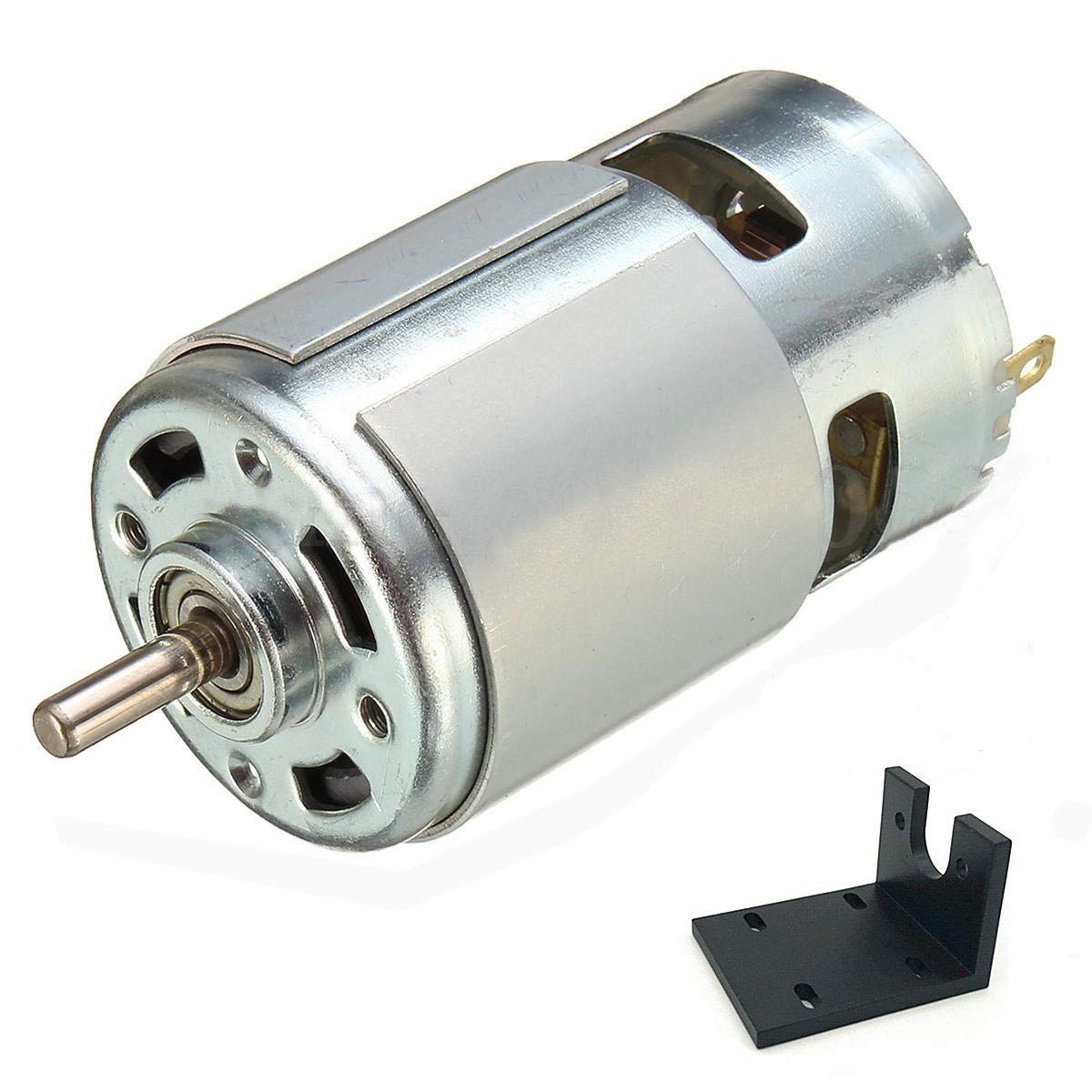
Can DC motors be used in robotics, and if so, what are some notable applications?
Yes, DC (Direct Current) motors can be used in robotics, and they are widely employed in various robotic applications. DC motors offer several advantages that make them suitable for robotic systems, including their controllability, compact size, and versatility. Here’s a detailed explanation of how DC motors are used in robotics and some notable applications:
DC Motors in Robotics:
DC motors are commonly used in robotics due to their ability to provide precise speed control and torque output. They can be easily controlled by adjusting the voltage applied to the motor, allowing for accurate and responsive motion control in robotic systems. Additionally, DC motors can be designed in compact sizes, making them suitable for applications with limited space and weight constraints.
There are two main types of DC motors used in robotics:
- DC Brushed Motors: These motors have a commutator and carbon brushes that provide the electrical connection to the rotating armature. They are relatively simple in design and cost-effective. However, they may require maintenance due to brush wear.
- DC Brushless Motors: These motors use electronic commutation instead of brushes, resulting in improved reliability and reduced maintenance requirements. They are often more efficient and offer higher power density compared to brushed motors.
Notable Applications of DC Motors in Robotics:
DC motors find applications in various robotic systems across different industries. Here are some notable examples:
1. Robotic Manipulators: DC motors are commonly used in robotic arms and manipulators to control the movement of joints and end-effectors. They provide precise control over position, speed, and torque, allowing robots to perform tasks such as pick-and-place operations, assembly, and material handling in industrial automation, manufacturing, and logistics.
2. Mobile Robots: DC motors are extensively utilized in mobile robots, including autonomous vehicles, drones, and rovers. They power the wheels or propellers, enabling the robot to navigate and move in different environments. DC motors with high torque output are particularly useful for off-road or rugged terrain applications.
3. Humanoid Robots: DC motors play a critical role in humanoid robots, which aim to replicate human-like movements and capabilities. They are employed in various joints, including those of the head, arms, legs, and hands, allowing humanoid robots to perform complex movements and tasks such as walking, grasping objects, and facial expressions.
4. Robotic Exoskeletons: DC motors are used in robotic exoskeletons, which are wearable devices designed to enhance human strength and mobility. They provide the necessary actuation and power for assisting or augmenting human movements, such as walking, lifting heavy objects, and rehabilitation purposes.
5. Educational Robotics: DC motors are popular in educational robotics platforms and kits, including those used in schools, universities, and hobbyist projects. They provide a cost-effective and accessible way for students and enthusiasts to learn about robotics, programming, and control systems.
6. Precision Robotics: DC motors with high-precision control are employed in applications that require precise positioning and motion control, such as robotic surgery systems, laboratory automation, and 3D printing. The ability of DC motors to achieve accurate and repeatable movements makes them suitable for tasks that demand high levels of precision.
These are just a few examples of how DC motors are used in robotics. The flexibility, controllability, and compactness of DC motors make them a popular choice in a wide range of robotic applications, contributing to the advancement of automation, exploration, healthcare, and other industries.


editor by CX 2024-01-12